The mangoes of India, one by one

From Ratnagiri's Alphonso to Malihabad's Dasheri: where India's best-loved mangoes grow, when they ripen, how they look and taste, and how far each one travels before it reaches Delhi NCR.

Twelve mangoes every Indian kitchen knows

India grows more than a thousand kinds of mango. These are the ones you are most likely to meet in a Delhi market between April and August, in the order the season brings them.

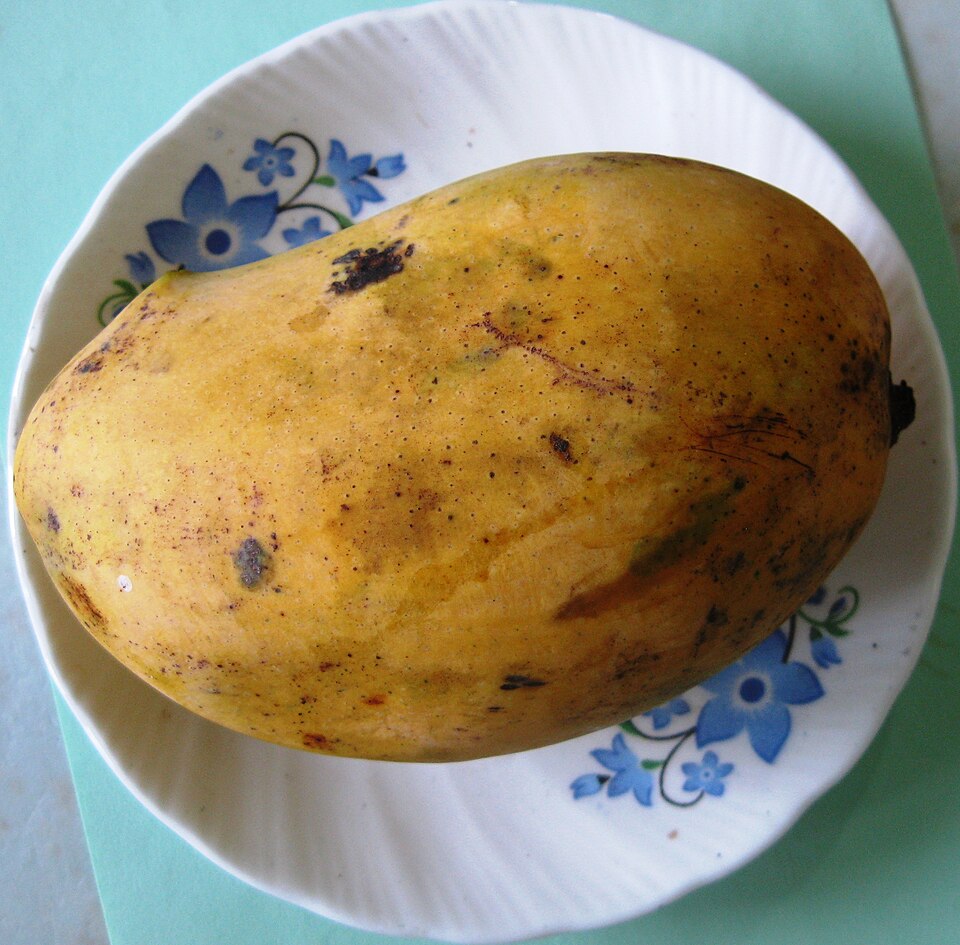
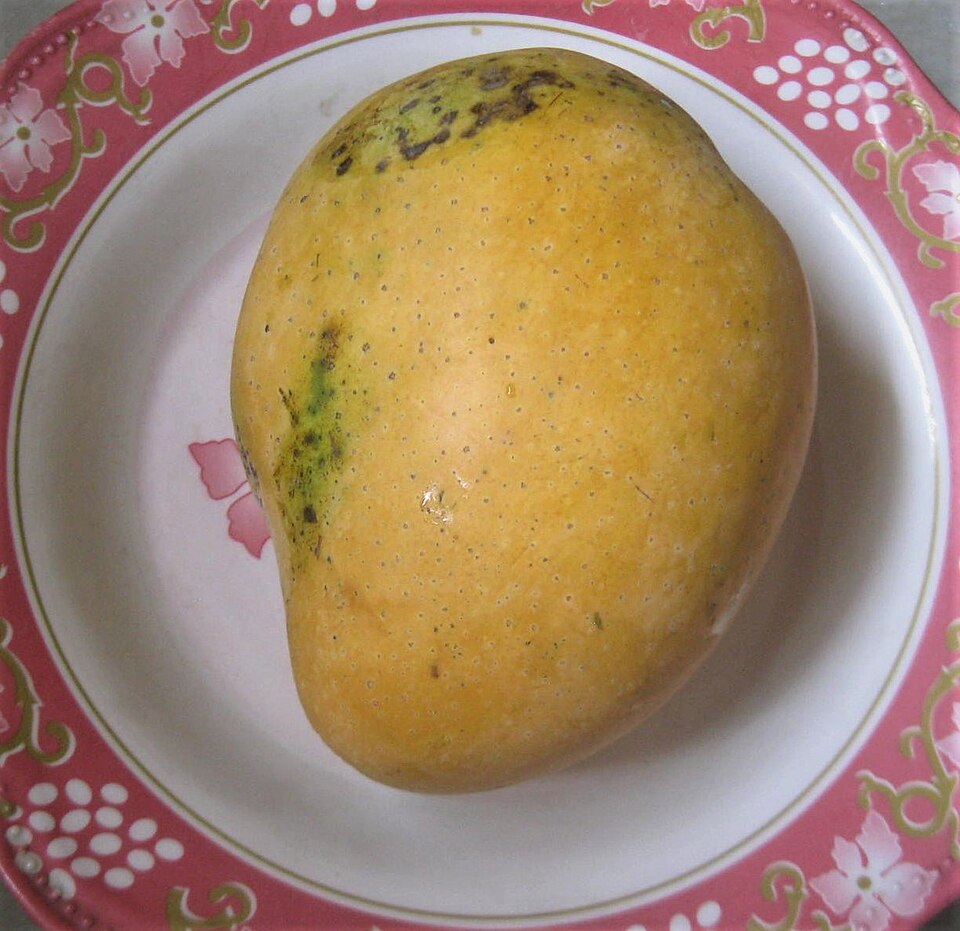
A single ripe golden-yellow Banganapalli mango on a plate

Banganapalli बंगनपल्ली · सफ़ेदा

GI tag

Kurnool district, Andhra Pradesh

Season
April – early June
Looks
Large and oval, with thin, smooth golden-yellow skin
Tastes
Mildly sweet and firm, with fibreless pale-yellow flesh

Sold in the north as Safeda, it is usually the first mango of the year in Delhi markets — and one of the best at surviving a long journey.

Journey to Delhi NCR3–4 days

About 1,750 km by road. Picked firm and mature-green, it ripens in cartons on the way.
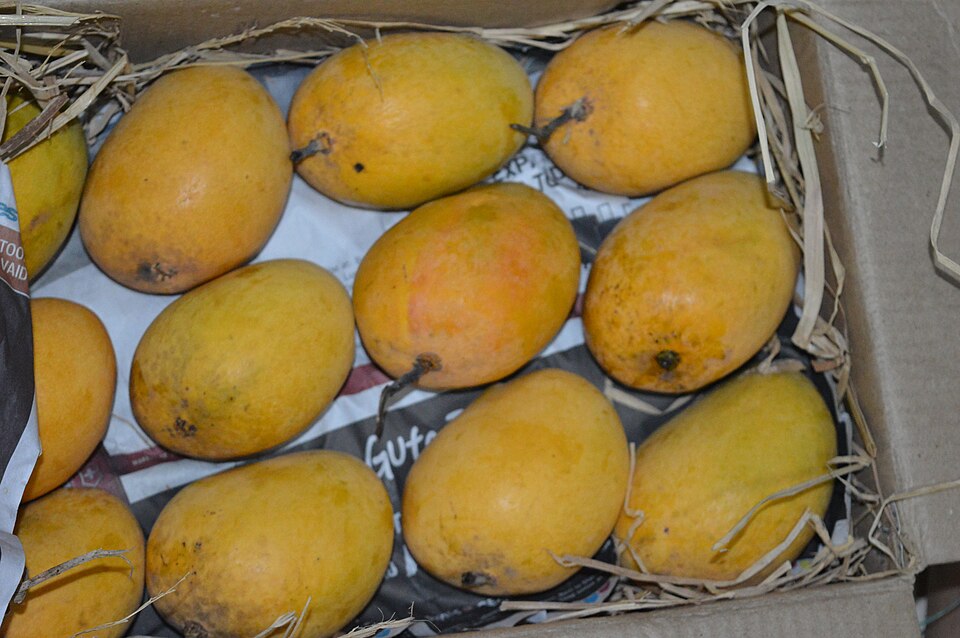
A box of ripe golden Alphonso mangoes packed in straw

Alphonso हापूस

GI tag

Ratnagiri & Devgad, Konkan coast, Maharashtra

Season
April – May
Looks
Medium and egg-shaped; golden skin with a red-orange blush at the shoulder
Tastes
Rich, creamy and saffron-sweet, with a strong, unmistakable aroma

Named after the Portuguese general Afonso de Albuquerque, it is India's best-known mango abroad and among its most expensive at home.

Journey to Delhi NCR3–4 days

About 1,600 km by road. Usually ripened in cartons or ripening rooms before sale.

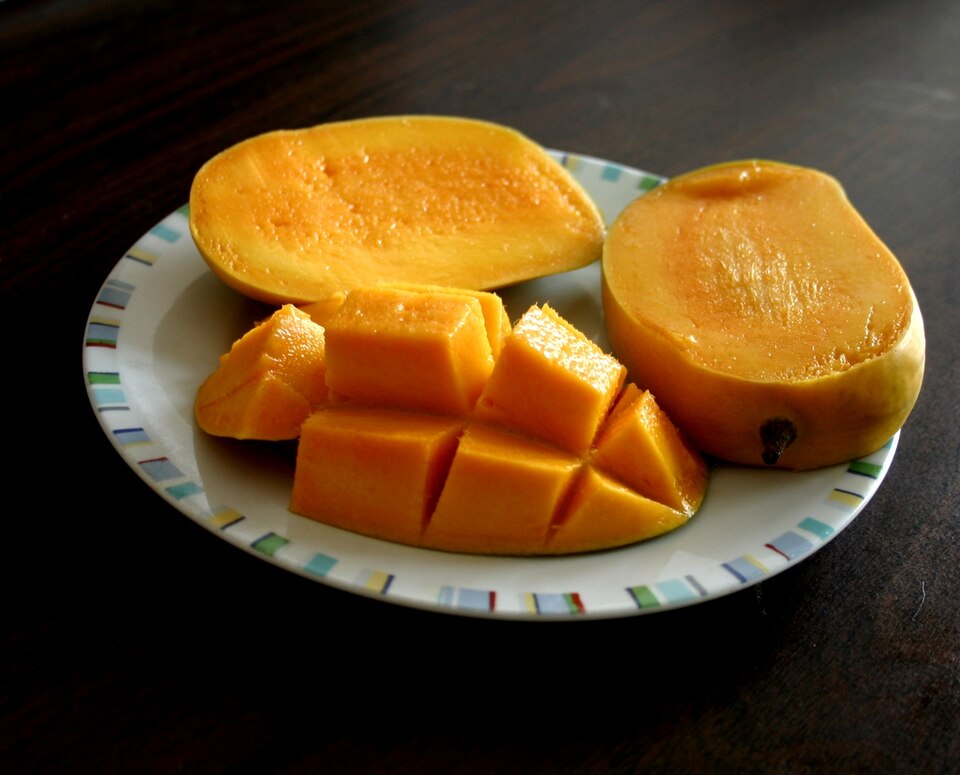
A Kesar mango cut open to show its deep saffron-orange flesh

Kesar केसर

GI tag

Junagadh & Gir, Saurashtra, Gujarat

Season
May – June
Looks
Medium and oval; green skin with golden patches
Tastes
Very sweet and fragrant, with deep saffron-orange flesh

Named for the colour of its pulp — kesar is saffron. A favourite for aamras and mango shrikhand.

Journey to Delhi NCR2–3 days

About 1,150 km by road.

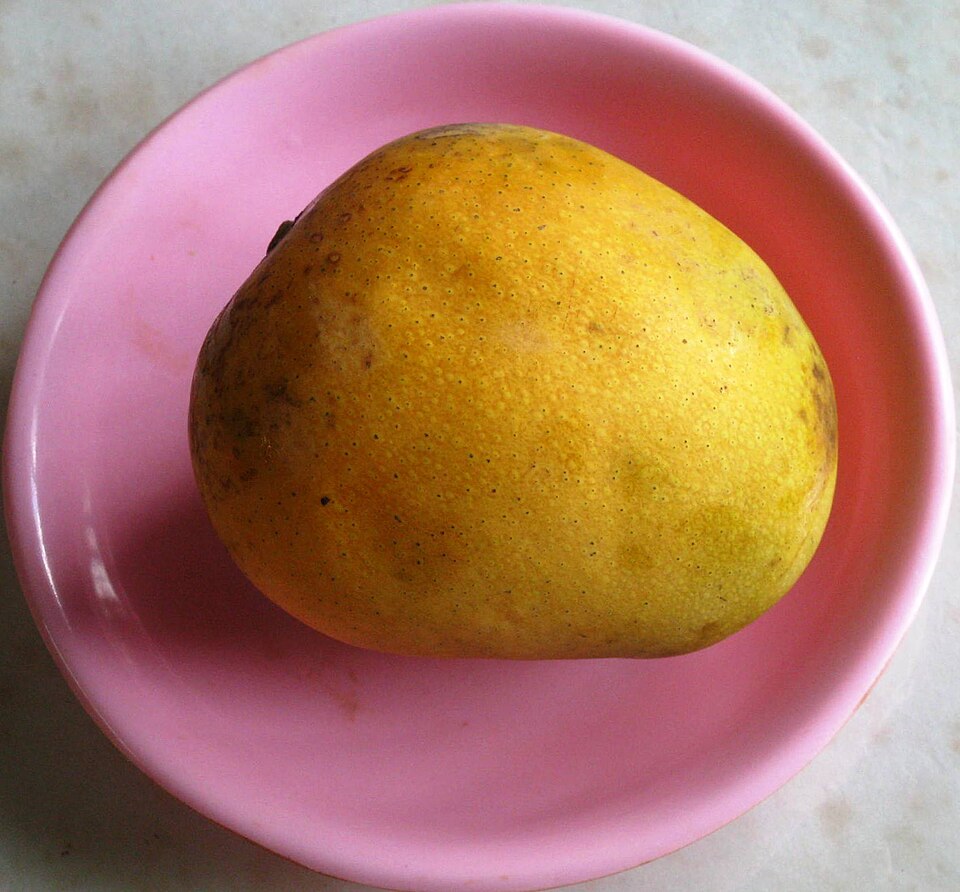
A single ripe Himsagar mango on a pink plate

Himsagar हिमसागर

GI tag

Murshidabad, Nadia & Malda, West Bengal

Season
Late May – June
Looks
Medium and rounded; green to yellow-green skin, even when ripe
Tastes
Intensely sweet and creamy, with no fibre at all

Bengal's pride, with one of the shortest seasons of any mango — a few weeks and it is gone.

Journey to Delhi NCR2–3 days

About 1,400 km by road. Soft and short-lived, so it is rarely seen far from home.

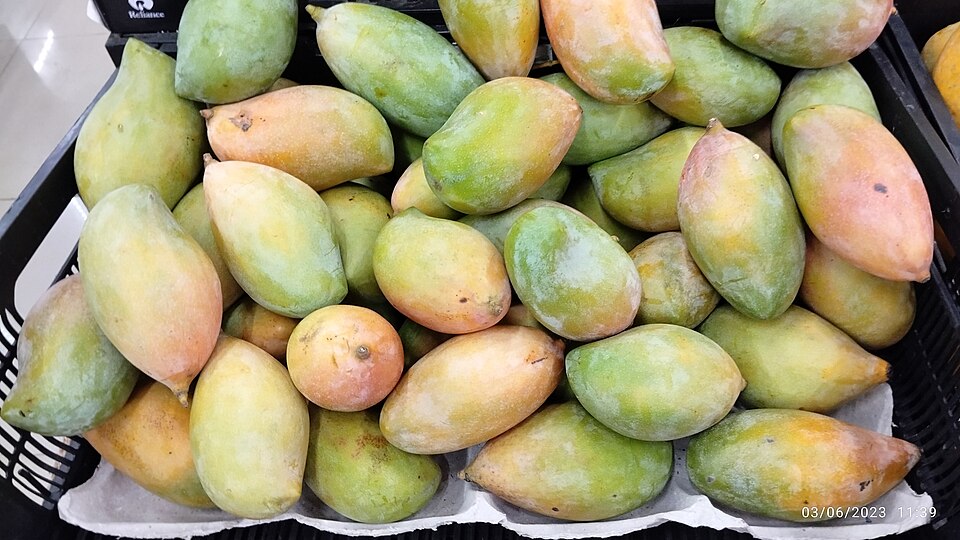
A crate of Totapuri mangoes with pointed, beak-like tips and a red blush

Totapuri तोतापुरी

Karnataka, Andhra Pradesh & Tamil Nadu

Season
May – early July
Looks
Oblong with a pointed, parrot-beak tip; green turning golden
Tastes
Lightly sweet and tangy, with firm flesh

Tota means parrot. Much of India's mango pulp, juice and pickle starts as Totapuri.

Journey to Delhi NCR4–5 days

About 2,150 km by road. Most of it reaches Delhi already turned into pulp.

A crate of freshly picked Dasheri mangoes, green turning golden, from the Aamr Vaatika orchard

Dasheri दशहरी

GI tagGrown at Aamr Vaatika

Malihabad, near Lucknow, Uttar Pradesh

Season
June – early July
Looks
Slender and oblong; thin skin turning from green to golden-yellow
Tastes
Honey-sweet and very fragrant, with smooth, fibreless flesh

Every Dasheri tree descends from one mother tree in Dasheri village, near Kakori, said to be over two hundred years old and still fruiting.

From MalihabadAbout a day
From our orchardSame day

About 520 km from Malihabad. Aamr Vaatika is two hours from India Gate by national highway, so ours are picked in the morning and at the door by evening.

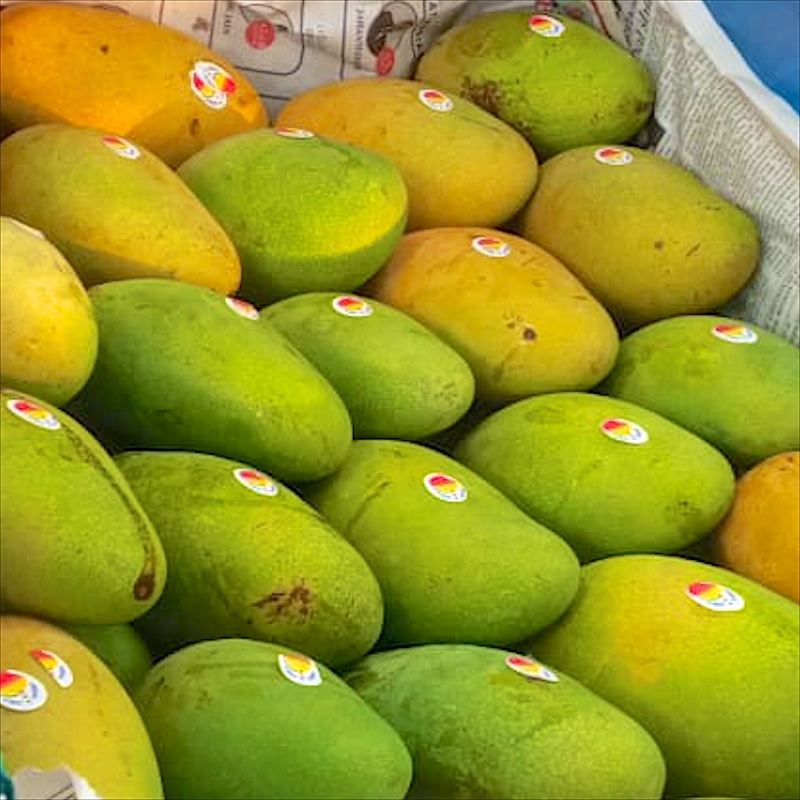
Pale green Langra mangoes packed in paper-lined rows, from the Aamr Vaatika orchard

Langra लंगड़ा

GI tagGrown at Aamr Vaatika

Varanasi, Uttar Pradesh — and across Bihar

Season
Late June – July
Looks
Medium and oval; its thin skin stays green even when fully ripe
Tastes
Tangy-sweet and juicy, with a distinctive aroma and no fibre

The story goes that the first tree grew in the garden of a farmer in Banaras who walked with a limp — langda — and the name stuck. Don't judge it by its green skin.

From Varanasi1–2 days
From our orchardSame day

About 820 km from Varanasi. Aamr Vaatika is two hours from India Gate by national highway.

Jardalu जर्दालू

GI tag

Bhagalpur, Bihar

Season
June – early July
Looks
Medium and oblong, with smooth, pale lemon-yellow skin
Tastes
Gently sweet and low in acidity, with a delicate aroma

Its name comes from zardalu, Persian for apricot — a nod to its pale golden colour. Bihar sends Jardalu each season as a gift to the country's leaders in Delhi.

Journey to Delhi NCR2–3 days

About 1,200 km by road.

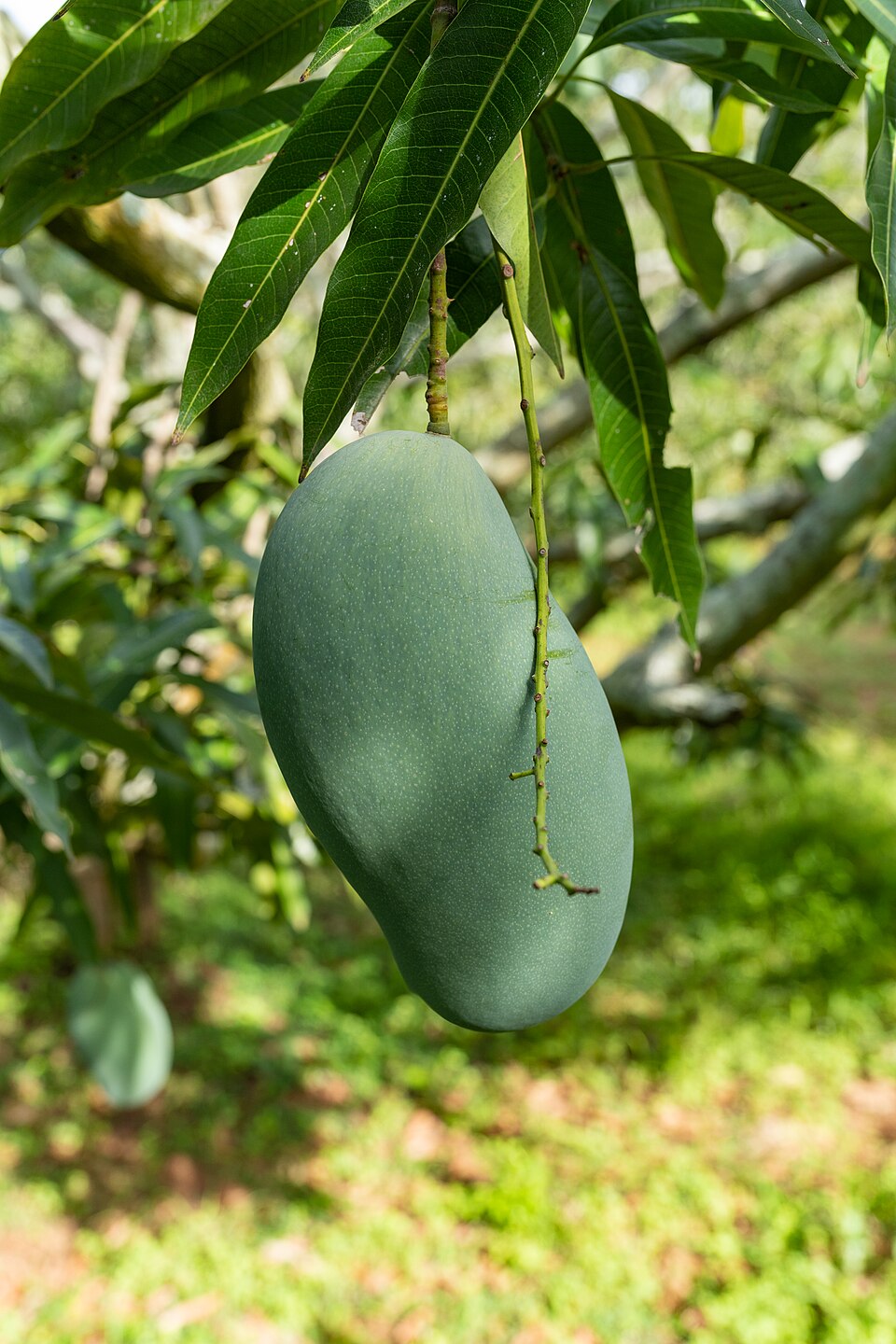
A Mallika mango hanging from a branch among long green leaves

Mallika मल्लिका

Karnataka & Andhra Pradesh — also grown in the north

Season
June – early July
Looks
Large and long, with bright yellow skin when ripe
Tastes
Sweet with honey and citrus notes; firm and fibreless

A cross of Neelam and Dasheri, bred at the Indian Agricultural Research Institute in New Delhi in 1972.

Journey to Delhi NCR3–4 days

About 2,000 km from the southern orchards that grow most of it.

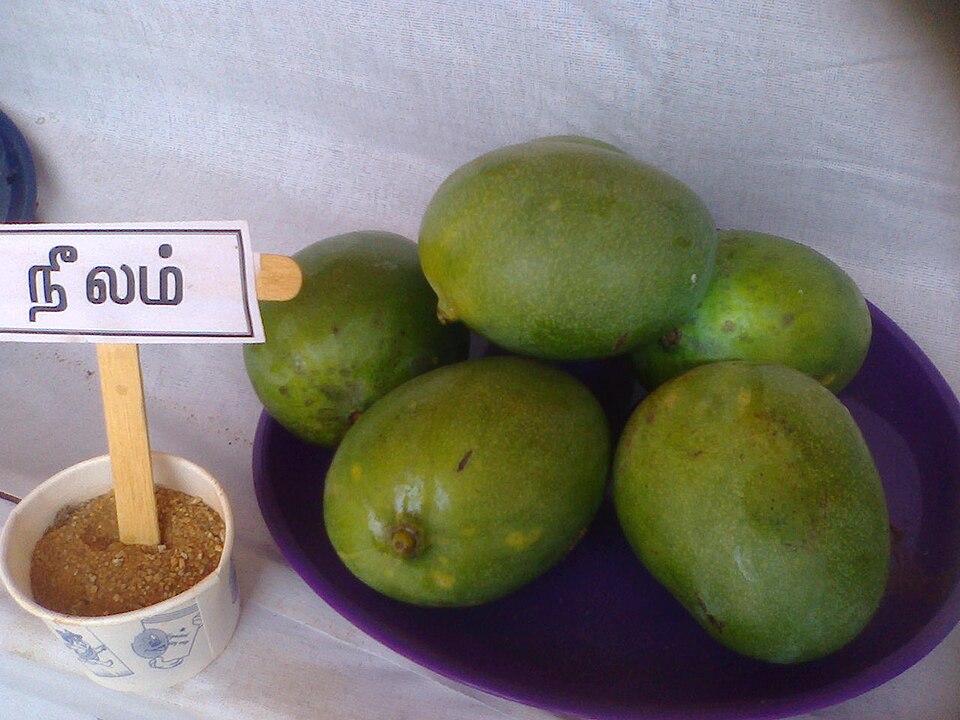
Neelam mangoes in a bowl beside a name card

Neelam नीलम

Tamil Nadu, Andhra Pradesh & Karnataka

Season
Late June – July
Looks
Small to medium and egg-shaped; orange-yellow when ripe
Tastes
Sweet and mild, with a light floral fragrance

A late variety that keeps well, so it often stays in shops after the early mangoes have gone.

Journey to Delhi NCR4–5 days

About 2,250 km by road.

A single large, ripe yellow Chausa mango in a bowl

Chausa चौसा

Uttar Pradesh (Hardoi, Saharanpur, Meerut) & Bihar

Season
July – August
Looks
Large and plump, with bright yellow skin
Tastes
Very sweet and juicy — the classic mango for sucking straight from the fruit

Named after Chausa in Bihar, where Sher Shah Suri won a battle in 1539 and, the story goes, celebrated with this mango.

Journey to Delhi NCRAbout a day

About 200–450 km from the Uttar Pradesh orchards.

A heap of large green Fazli mangoes from Malda

Fazli फ़ज़ली

GI tag

Malda, West Bengal & Bhagalpur, Bihar

Season
Late July – August
Looks
Very large — often more than half a kilo — with thick green skin
Tastes
Mildly sweet, with firm flesh; much loved for aam papad and pickle

One of the last mangoes of the year, it carries the season into August.

Journey to Delhi NCR2–3 days

About 1,350 km by road.

Journey times are typical for road freight from each variety's main growing region to Azadpur Mandi, Delhi's wholesale fruit market; reaching a shop or doorstep usually takes another day or more. Distances are approximate.

The mango season, month by month

Southern and western mangoes open the season in April; the north takes over in June, and the last fruit of the year arrives in August.

Variety Apr May Jun Jul Aug
BanganapalliApril – early June
AlphonsoApril – May
KesarMay – June
TotapuriMay – early July
HimsagarLate May – June
DasheriJune – early July
JardaluJune – early July
MallikaJune – early July
LangraLate June – July
NeelamLate June – July
ChausaJuly – August
FazliLate July – August

Seasons shift by a week or two with each year's weather. Highlighted rows are the varieties grown at Aamr Vaatika.

Why the journey matters

A mango keeps softening and sweetening after it is picked, but its flavour develops best on the branch. Fruit that has to travel for days is picked while still firm and green so it survives the trip, then ripened in cartons or ripening rooms near the market.

Fruit grown close to the city can stay on the tree until it is nearly ready. That is why a Dasheri eaten in an orchard tastes different from one that has spent a week on the road.

Our own Dasheri and Langra grow two hours from India Gate, along the national highway — close enough to be picked in the morning and reach homes across Delhi NCR by evening, without cold storage along the way.

A long-distance mango's week, typically

  • Day 1Picked mature-green, graded and packed
  • Days 2–4Trucked across several states to a wholesale market
  • Days 4–5Ripened in cartons or a ripening room
  • Days 5–7Sold on to retailers, then to you
Photo credits

Dasheri and Langra: Aamr Vaatika. Other photographs are from Wikimedia Commons, used under their licences:

Photographs were resized for this page.